
Solving Real Business Challenges with Custom AI Solutions


Understanding Custom AI Solutions
In today’s rapidly evolving business landscape, leveraging artificial intelligence (AI) has become crucial for maintaining a competitive edge. Custom AI solutions offer businesses the ability to address specific challenges tailored to their unique needs, rather than relying on generic, one-size-fits-all tools. This customization allows companies to optimize operations, enhance decision-making, and improve customer experiences.
The implementation of custom AI can revolutionize various aspects of a business, from automating mundane tasks to providing predictive analytics for strategic planning. By integrating AI, companies can streamline processes and free up valuable resources to focus on innovation and growth.

Identifying Business Challenges
Before implementing AI solutions, it's essential to identify the specific challenges a business faces. These challenges can range from inefficient supply chain management to suboptimal customer engagement strategies. By pinpointing these issues, businesses can better determine which AI technologies will have the most significant impact.
For instance, in retail, understanding customer behavior through data analysis can lead to more personalized marketing strategies. In manufacturing, predictive maintenance can drastically reduce downtime and improve efficiency.
Gathering and Analyzing Data
Data is the backbone of any AI implementation. Companies must first gather relevant data and analyze it to uncover trends and patterns. This analysis forms the foundation upon which AI solutions are built, ensuring they address the core issues effectively.

Designing Tailored AI Solutions
Once a business has a clear understanding of its challenges and data, the next step is designing custom AI solutions. This involves selecting the right AI technologies, such as machine learning, natural language processing, or robotics, to meet specific needs.
Collaboration with AI experts can be invaluable during this phase, ensuring the solutions are not only technically sound but also aligned with business goals. This partnership helps in creating AI models that are accurate, scalable, and adaptable to future changes.
Implementation and Integration
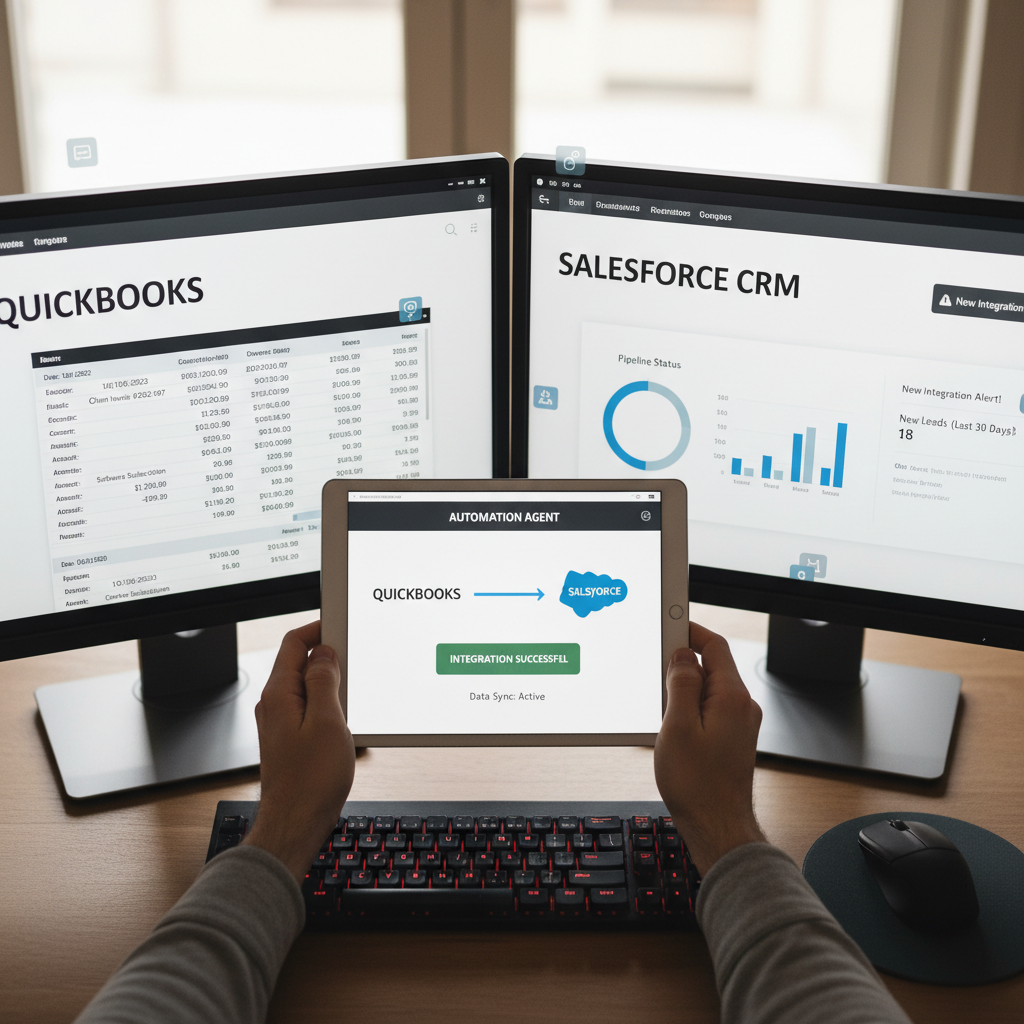
Implementing AI solutions requires careful planning and execution. Integration with existing systems should be seamless to avoid disruptions. Businesses need to ensure that the AI models are well-trained and continuously updated to maintain their effectiveness over time.
Monitoring and Optimization
After deployment, continuous monitoring is crucial to ensure AI solutions are delivering the desired results. Businesses should track performance metrics and gather feedback to identify areas for improvement. This ongoing optimization is essential to keep the AI solutions relevant and efficient.
Regular updates and training on new data sets allow AI models to evolve with changing business environments, ensuring they remain valuable assets for the organization.
Overcoming Challenges and Ensuring Success
While AI offers numerous advantages, businesses may encounter challenges such as data privacy concerns, integration issues, or resistance to change. Addressing these proactively through transparent communication and robust data governance policies can help mitigate risks.

Ultimately, the successful implementation of custom AI solutions requires a strategic approach, a willingness to adapt, and a commitment to continuous improvement. By embracing AI, businesses can transform challenges into opportunities for growth and innovation.